
As a new year begins and Catholics mark the end of the Christmas season this month, Brother Michael Perry, OFM, has a message: Pay attention to epiphanies.
The Feast of the Epiphany is, in the northern Hemisphere, celebrated when the nights are cold and the days short, traditionally observed on Jan. 6. But Bro. Michael doesn’t see epiphanies limited by the calendar.
Case in point: He marked an epiphany last July when darkness lasted but a few hours in a quiet twilight, navigating Alaska’s Yukon River on the way to far-flung Franciscan missions serving the Athabascan people.
“Epiphany is not just the Magi finding Jesus. God is present everywhere and in everything,” he recalled his own mystical experience, connecting himself to the nature of the Alaskan wilderness, where he discovered the quiet voice of God.
The Epiphany story provides an opportunity for conversion that resonates through the centuries.
Bro. Michael’s life journey has led him through various epiphanies. Currently, he is director of the Laudato Si’ Center at Siena University, an academic endeavor promoting Franciscan views on Creation and the vision of Pope Francis. His ministry has allowed him to travel the world. A native of Indianapolis, Bro. Michael previously served in Rome from 2013-21 as minister general for the worldwide OFM friars, after serving in the Democratic Republic of Congo.
Wherever he’s gone, each place makes an impact. He travels not just as a tourist but as a seeker of spiritual truths.
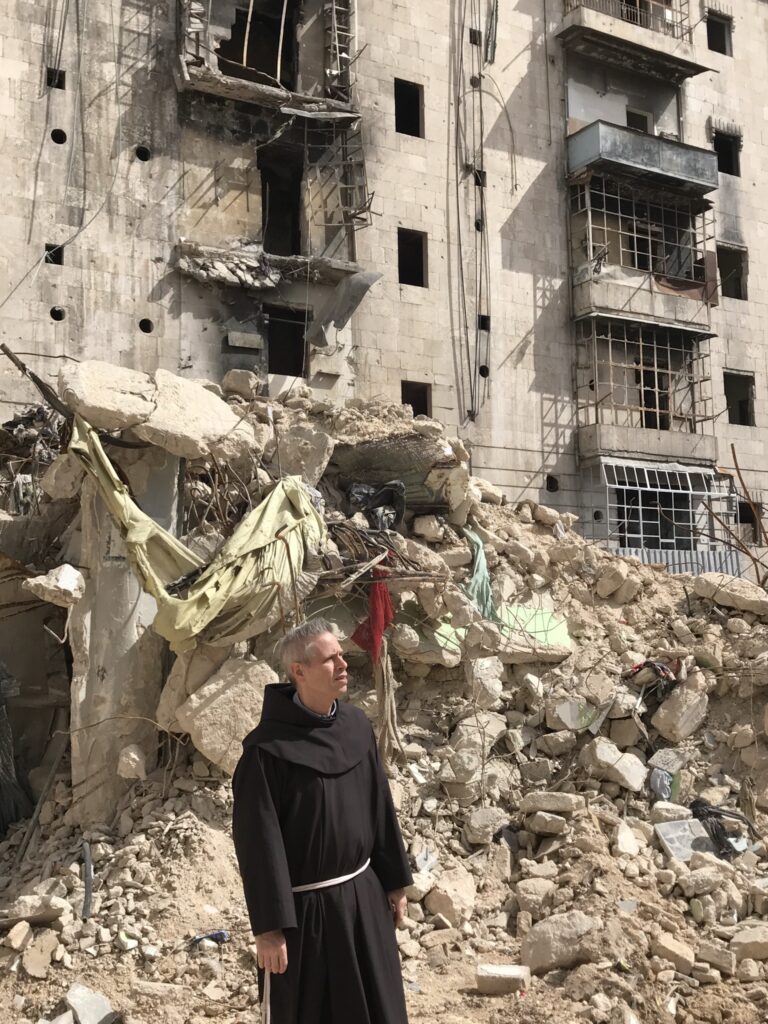
While serving in Rome, he went with four other friars to then war-torn Syria. The land was parched and barren, the towns and cities wracked by violence. Still, he recalled, flowers broke through the ground, signaling to him that there was hope even in the most horrific of situations.
In Congo, he presided over funerals in which entire communities came out to mourn, a sign of deep Christian faith amid hardships.
He found a similar approach to death among the Athabascans in Alaska.
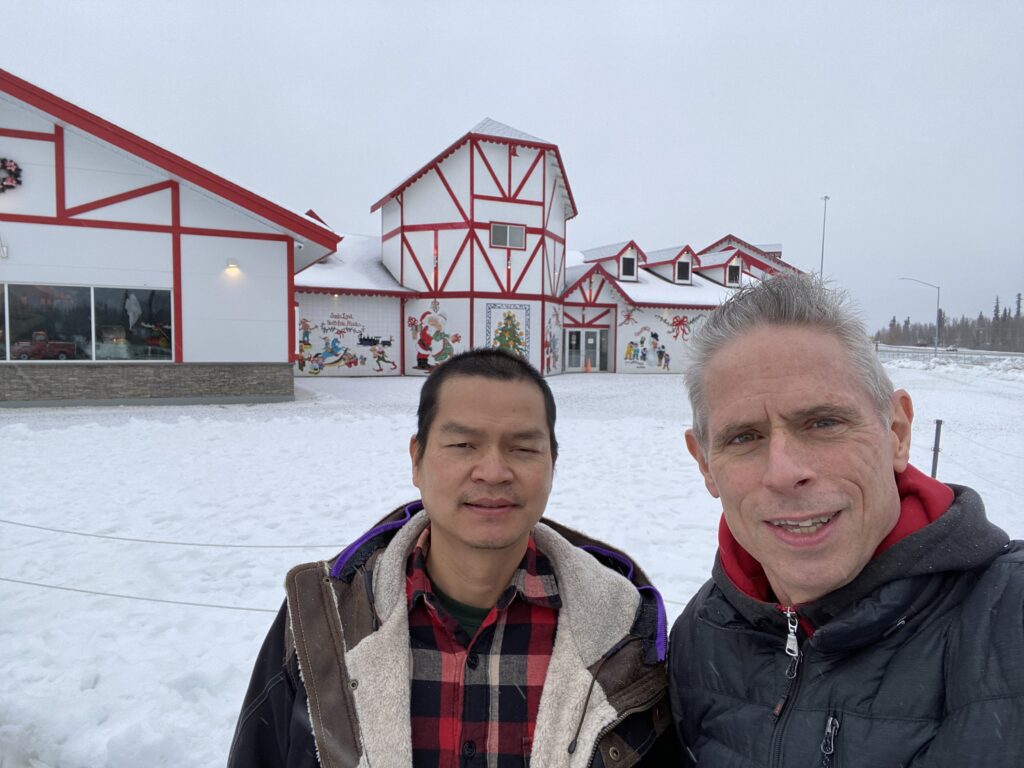
He came to Alaska last summer for three weeks to assist Fr. Thinh Tran, OFM, pastor of Our Lady of Snows in Nulato and mission churches scattered along the Yukon. Bro. Michael came to Alaska to minister the sacraments and, in the process, discovered new insights.
He found that, among the Athabascans, death and mourning are communal experiences. Native Alaskans now have a life expectancy into their mid-sixties, a timespan that was cut short amid the COVID pandemic, as well as ongoing issues of poverty and addiction.
In July, Bro. Michael prayed at the wake of a woman in her forties, a mother to two children, who had long suffered from heart ailments. He experienced the Athabaskan mourning rituals, a community practice that has evolved over centuries. Community centers serve as funeral homes, and the entire village will come out, mourning for days through rituals that combine prayer with socializing, tea, and card games.
His journeys to Alaska – this summer was his third – reinforce other epiphanies. One includes his work at the Laudato Si’ Center, where a regular message is a warning about the dangers of climate change.
In many ways, Alaska is a kind of canary in the coal mine, with the results of climate change more readily apparent.
Besides experiencing more intense and frequent weather events, the Athabascans experienced the horrors of COVID, which swept through the community, creating grief and isolation. Part of that can be attributed to climate change, said Bro. Michael.
“As the planet heats up, the pathogens will be more prevalent,” he said.
The regular melting of Alaska’s permafrost is another concern, as it could release additional pathogens into the atmosphere. And, breaking centuries of dependence for the Athabascans, salmon are now harder to find on the Yukon.
That has an impact on the tribe’s traditional food supply and serves as a bellwether for the effects of warming on the northern Pacific and its impact on ocean life.
The Athabascans are aware of the environmental consequences, said Bro. Michael. While in Alaska, he listened as tribal members discussed their response to the changing climate. Part of the decline in salmon is due to overfishing, and the tribe recognized their contribution to the process of depleting a precious resource.
The tribal elders recognize other changes. For one, the Yukon – a vital transportation link traditionally traversed via sled during the cold winter months – now has a shorter frozen time. The ice breaks up more frequently as the warmer winters intrude.
“It’s changed. It’s not the same. Everyone recognizes it,” said Bro. Michael.
His transformation causes him to pay careful attention to the Epiphany Gospel story.
In his travels, he said, “God is speaking to me.” He sees conversion through the eyes of a sojourner who pays attention, transformed by what he has seen and heard.
In Matthew’s Gospel, the Magi, after visiting the infant Jesus, decide not to return home by the same route they had traveled. That is attributed to their fear of the tyrant King Herod, but the meaning is deeper, said Bro. Michael.
“They were different from the journey. They couldn’t go back via the same path. They were new people. They were not the same,” he said.
He offered a message for this Epiphany: “All people and all of creation are on a journey from darkness to light, and from woundedness to wholeness, the gift of the Magi’s star, Jesus.”