Downtown Los Angeles offers business bustle as well as despair. For decades, the unsheltered have made their presence known, with the lucky ones living in a van or in makeshift tents and cardboard shelters. The unlucky take a space on the sidewalk.
City administrations come and go, yet the desperate remain. It is a neighborhood rife with substance abuse, disease and hunger, amid a business district and restaurants. Diners and office workers often look the other way. The glamour of Los Angeles and the California sunshine provide little distraction.
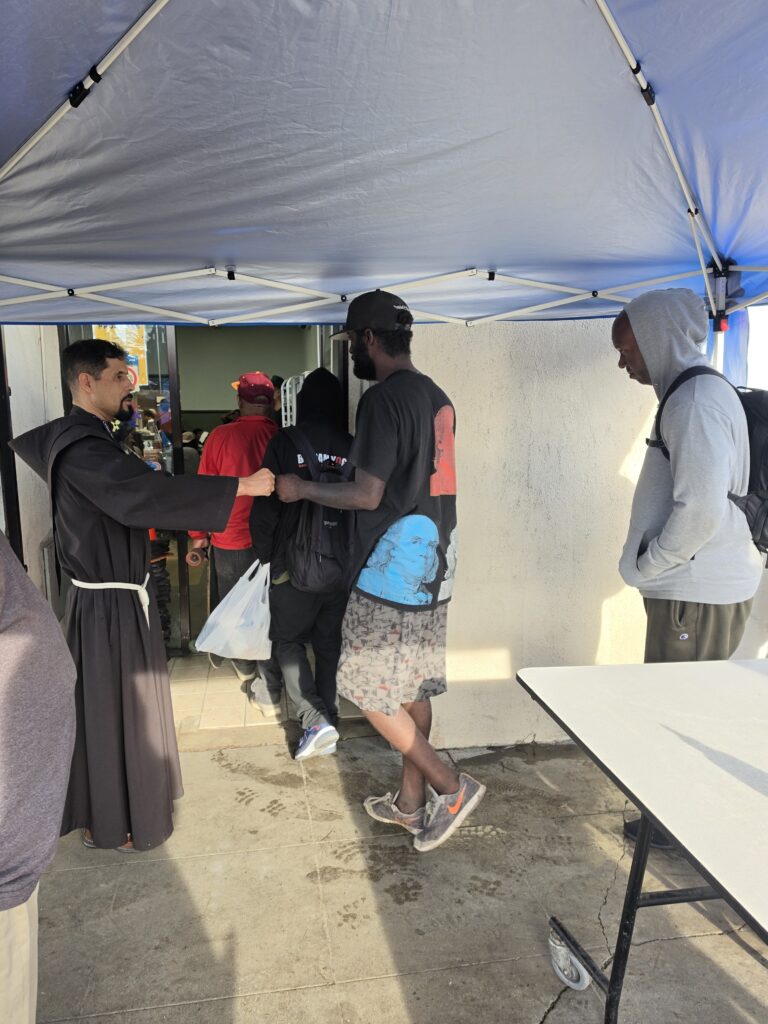
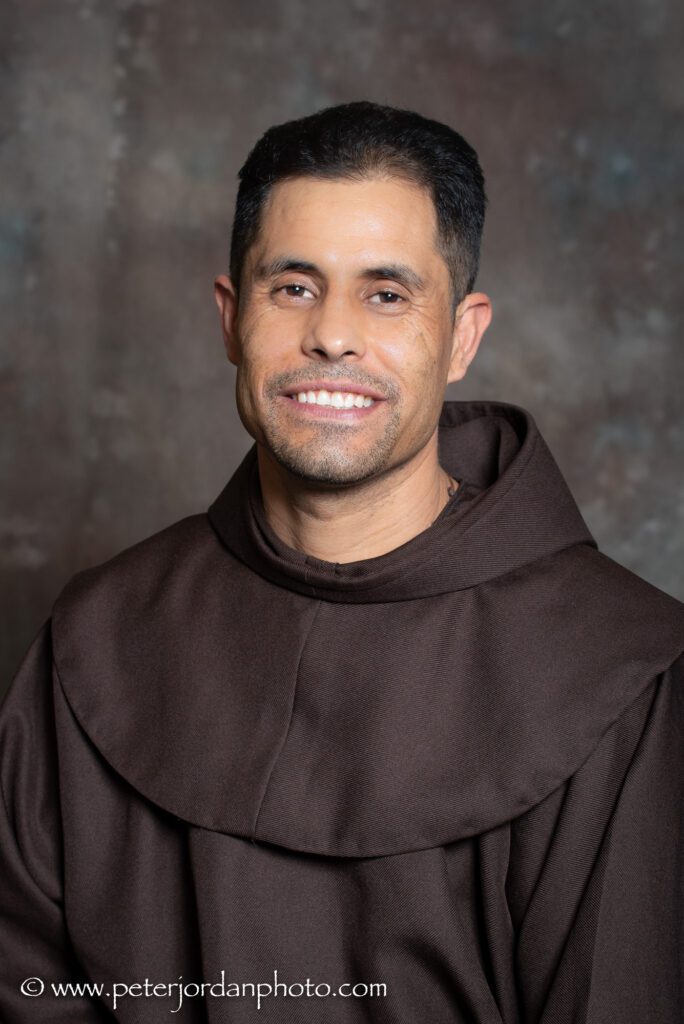
In the middle of this despair, close to the city’s infamous Skid Row, is Bro. Victor Vega, OFM, chaplain at the St. Francis Center, an outreach to those seeking a semblance of dignity. What the center offer is the basics, a chance for breakfast and a boxed lunch, as well as a set of clothes, an opportunity to wash clothes and bodies.
The ministry of the humble and unassuming friar seeks out those types of services that go a step beyond, providing touches about human dignity to those left behind.
That includes haircuts. Every Friday, Bro. Victor sets up an impromptu shop, assisted by St. Francis clients who want to help, and spends the day cutting hair, serving up to 20 customers a day.
“I saw the need and saw how it was expensive for them,” he said about the people served by St. Francis. They need to know that they, too, can be handsome, at least for a while. In the end, “they feel better about themselves,” he said.
The haircuts are just a tiny slice of the services offered at St. Francis. The numbers are huge: Each year, 2,100 volunteers serve up 168,000 meals, provide 2,600 showers, offer opportunities for 3,000 loads of laundry, and serve 47,000 food pantry clients. Located at 1835 S. Hope Street, the Center provides a piece of dignity to those who experience little in their own lives.
There’s still a chance to hope on Hope Street.
The Center was founded 54 years ago by the late Bro. Hugh Noonan, OFM, who began with a simple coffee and doughnuts distribution into an operation that tries to address more extensive needs. The goal is to provide services with a Franciscan-style and be a place where everyone knows names.
Volunteers come from church and school groups as well as organizations seeking charitable opportunities from across the region. St. Francis provides a space where Christian charity is exercised freely.
Brother Victor has been at St. Francis for the past six years. He’s a long-term expert in serving the poor: previous service includes ministry at the St. Anthony Foundation, the Franciscan agency in San Francisco, as well as service in social ministry in Oakland.
The friar is no mere dabbler on the other side of the tracks. He knows what struggle is like: Born in Mexico, he was a farmworker for years and also worked odd jobs, including fixing cars before becoming a friar. That long practical experience has kept him aware of what people need and how he might be of service.
From his life as a farmworker, he’s found a special kinship with the poor, something shared with his fellow Franciscans.
“For me it’s my vocation. It gives me meaning to my vocation, an opportunity for me to practice my charism and Franciscan values,” he said.
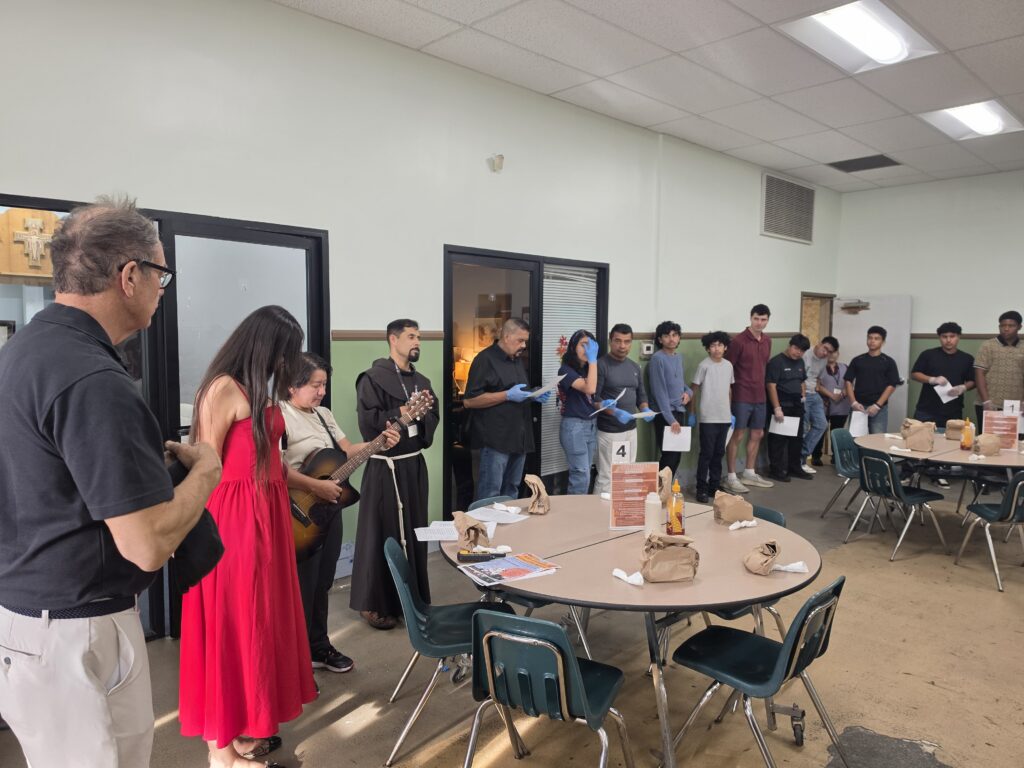
He distributes food and clothing. He also leads prayer services for the staff and volunteers, a visible Franciscan presence.
Brother Victor came to St. Francis while the country and Skid Row were in the grips of Covid. It was a time of fear, particularly among the street people who live in crowded and unsanitary conditions. St. Francis stayed open throughout.
He’s noticed the developments in the neighborhood. Sometimes the city will clear out the campsites. Neighboring districts have become magnets for investment, as real estate developers see opportunities in the area’s access to a growing downtown. The new apartments and stores bring side effects. The result: rents rise, and more people are thrown out into the streets.
“The daytime is safe but not so much at night,” noted Bro. Victor. He tries to keep up with the kinds of services people in more affluent areas might expect from Franciscans in ministry. One of these is a blessing of the animals held every October in honor of St. Francis of Assisi. Those who live on the streets come with their pets. The blessing provides a spiritual support to pet owners who struggle with their own food needs as well as those of their animals.
Brother Victor’s pre-Franciscan experience comes in handy. He helped arrange to get a car for a Ukrainian immigrant woman who landed in Skid Row, far away from her war-torn country.
He arranged for driving lessons and a job at a restaurant owned by a St. Francis Cetner volunteer. She is now living independently, a beneficiary of Bro. Victor’s efforts to locate affordable housing for Skid Row residents seeking a life beyond the streets and the shelter system.
Mass deportation threats hit immigrants surviving on the streets of Los Angeles. Africans, Eastern Europeans and Central Americans who lack documentation live in fear.
But the migrants, along with the rest of the struggling residents of the neighborhood, find reason to feel better about themselves.
People come to St. Francis “because it is a place where they feel safe and welcome. This is a place for hope,” said Bro. Victor