

Pope Leo XIV may be an Augustinian, but he has a special fondness for Franciscans.On Oct. 4, the Feast of St. Francis, he issued Dilexi Te, an apostolic exhortation, a reflection on the Church’s response to the poor. In it, he devotes considerable attention to Franciscan charism.
In the letter, addressed to all Christians, Leo noted that Jesus identified himself with the lowest ranks of society and with his love poured out to the end, he confirms the dignity of every human being, especially when “they are weak, scorned, or suffering.”
He calls upon his readers, as they contemplate the love of Jesus, to be “inspired to be more attentive to the sufferings and needs of others and confirmed in our efforts to share in his work of liberation as instruments for the spread of his love.”
An exemplar of the Church’s love for the poor can be found in St. Francis of Assisi, the pope noted.
“Care for the poor was also a great concern of Saint Francis of Assisi: in the person of a leper, Christ himself embraced Francis and changed his life. Even today, Saint Francis, as the Poor Man of Assisi, continues to inspire us by his outstanding example.”
Leo credited Francis with an “evangelical renewal in the Christians and society of his time. Wealthy and self-confident, the young Francis was taken aback and converted by his direct contact with the poor and outcasts of society. The story of his life continues to appeal to the minds and hearts of believers, and many non-believers as well.”
Leo credited the Franciscans for being witnesses to evangelical poverty.
“In the thirteenth century, faced with the growth of cities, the concentration of wealth and the emergence of new forms of poverty, the Holy Spirit gave rise to a new type of consecration in the Church: the mendicant orders. Unlike the stable monastic model, mendicants adopted an itinerant life, without personal or communal property, entrusting themselves entirely to providence. They did not merely serve the poor: they made themselves poor with them.
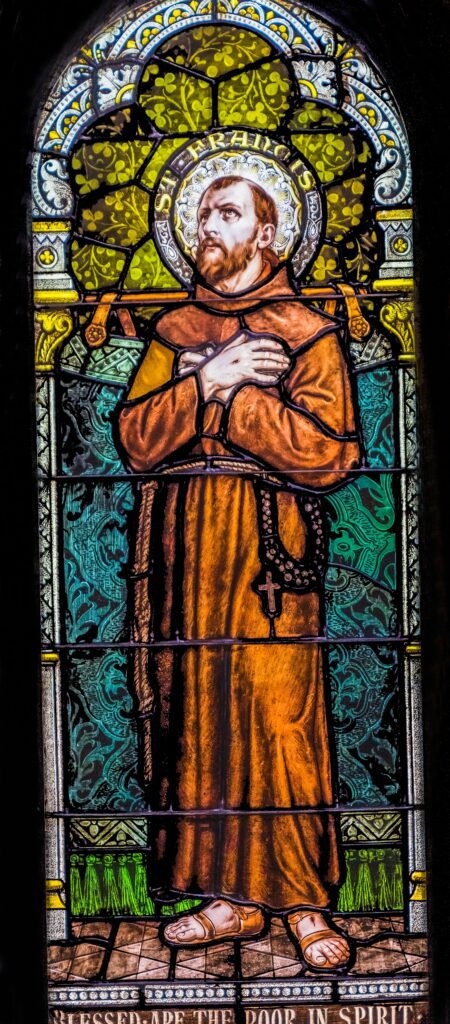
They saw the city as a new desert and the marginalized as new spiritual teachers,” he said.
Pope Leo sees St. Francis as “the icon of this spiritual springtime.”
“By embracing poverty, he wanted to imitate Christ, who was poor, naked and crucified. In his Rule, he asks that ‘the brothers should not appropriate anything, neither house, nor place, nor anything else. And as pilgrims and strangers in this world, serving the Lord in poverty and humility, they should go about begging with confidence, and should not be ashamed, because the Lord made himself poor for us in this world.’”
Francis founded an evangelical fraternity devoted to the poor, wrote Pope Leo.
“In the poor, he saw brothers and sisters, living images of the Lord. His mission was to be with them, and he did so through a solidarity that overcame distances and a compassionate love. Francis’ poverty was relational: it led him to become a neighbor, equal to, or indeed lesser than others. His holiness sprang from the conviction that Christ can only be truly received by giving oneself generously to one’s brothers and sisters.”
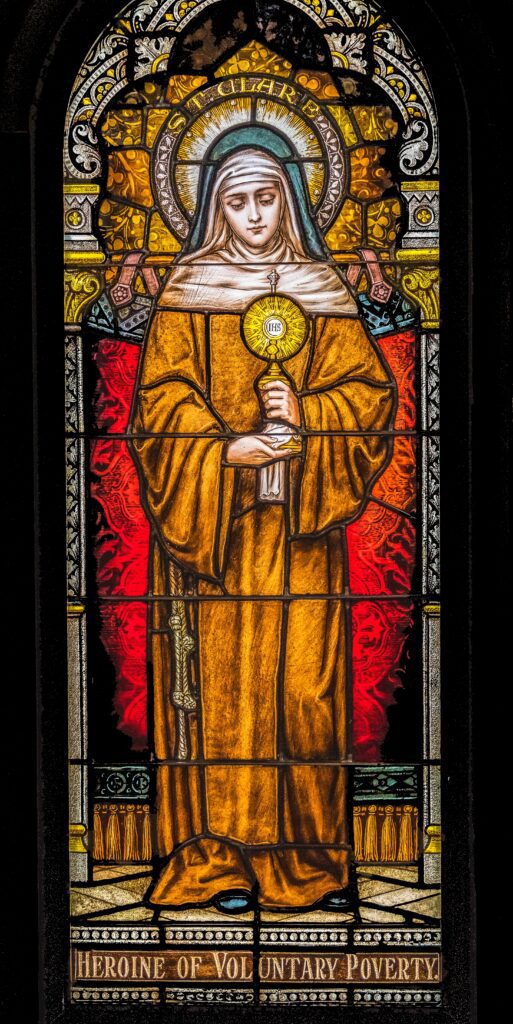
Saint Clare of Assisi, who was inspired by Francis, founded the Order of Poor Ladies, later called the Poor Clares.
Noted Leo: “Her spiritual struggle consisted in faithfully maintaining the ideal of radical poverty.” She lived “a total trust in God” with an “awareness that voluntary poverty was a form of freedom and prophecy. Clare taught her sisters that Christ was their only inheritance and that nothing should obscure their communion with him. Her prayerful and hidden life was a cry against worldliness and a silent defense of the poor and forgotten.”
The Franciscans provided a living response to exclusion and indifference, according to Leo. “They did not expressly propose social reforms, but an individual and communal conversion to the logic of the Kingdom. For them, poverty was not a consequence of a scarcity of goods, but a free choice: to make themselves small in order to welcome the small.”
Leo sees in Francis’ example a message for the Church in today’s world.
“These questions become all the more urgent in light of a serious flaw present in the life of our societies, but also in our Christian communities. The many forms of indifference we see all around us are in fact signs of an approach to life that is spreading in various and subtle ways. What is more, caught up as we are with our own needs, the sight of a person who is suffering disturbs us. It makes us uneasy, since we have no time to waste on other people’s problems. These are symptoms of an unhealthy society. A society that seeks prosperity but turns its back on suffering. May we not sink to such depths!”
Inspired by the vision of Francis and his followers, Leo writes that the Church needs to align herself with the poor.
“By her very nature, the Church is in solidarity with the poor, the excluded, the marginalized and all those considered the outcasts of society. The poor are at the heart of the Church because ‘our faith in Christ, who became poor, and was always close to the poor and the outcast, is the basis of our concern for the integral development of society’s most neglected members.’”